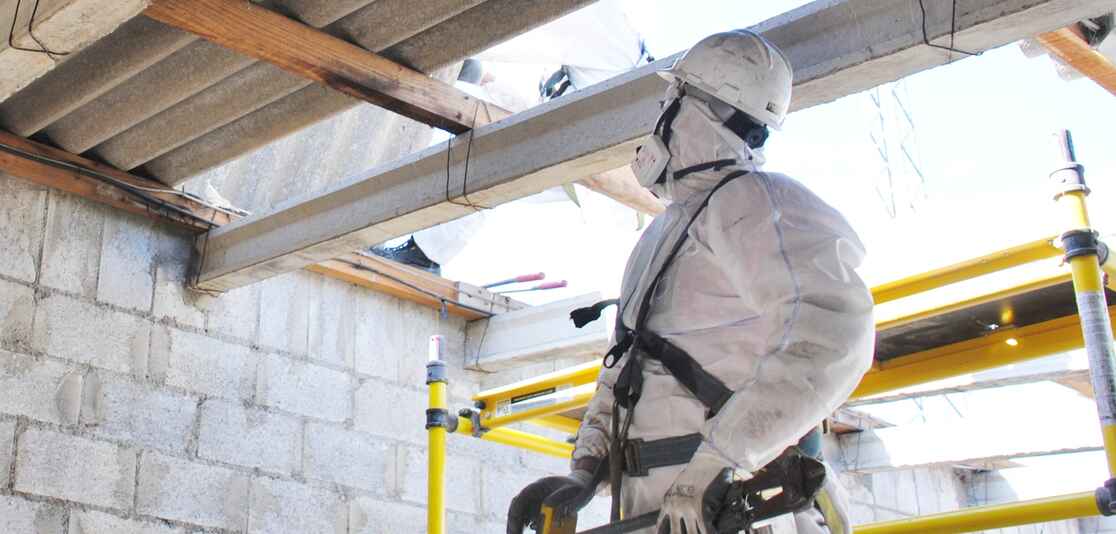
One of the biggest risks during renovation is the removal of asbestos. Follow our best tips on how to identify asbestos, remove it safely and prevent dangerous exposure for you and your family.
What is asbestos?
Asbestos was building material of choice post World War II, for almost a third of Australian homes, right up until the mid 1980’s.
Banned in Australia in 2003, the serious health issues caused by asbestos fibres are still numerous, yet many DIY renovators still expose themselves to the risk everyday. Invisible to the naked eye, these insidious asbestos fibres once released into the air, are harmful when inhaled.
There are 2 types of Asbestos products. They are known as friable or bonded asbestos. “Friable asbestos” products crumble into dust with very light hand pressure, such as loose fill roofing insulation, whilst “bonded asbestos” products are solid, like ‘fibro’ or asbestos cement sheeting.
Where do you find asbestos?
You’ll typically find asbestos in most houses built before 1987, or houses that were renovated or extended during that time.
Asbestos-based products were used in roofing, shingles, siding, wall cladding, eaves, thermal boards, around fireplaces, water pipes and fencing.
How to identify if you have asbestos in your home?
Because asbestos was used in a wide variety of homes - including brick, weatherboard and apartment blocks - detecting it by appearance alone is virtually impossible. Only scientific testing can accurately confirm its presence.
What’s more it’s not something you can “see” and may be lying beneath bathroom floors, wall tiles, or inside walls and ceilings. When in doubt, you must assume any materials installed before 1990 contains asbestos and then follow the necessary precautions.
A helpful database of products containing asbestos can help you identify where asbestos may be lurking in your home. Begin by checking obvious places such as fencing, external wall cladding, eaves, shingles and roofing.
Another way to find out confirm whether or not your home contains asbestos, is to check with your local council. They should have a record of when your home was built, and if there have been any renovations.
How to safely manage asbestos
If you do find evidence of asbestos in your home DO NOT attempt to remove it or disturb it, in any way.
If it is in good condition, it can be left alone When asbestos is disturbed, broken, sanded or cut, asbestos fibres are released into the air and can increase the risk of being inhaled by yourself, family or neighbours.
How to remove asbestos safely
While most cases of asbestos related diseases result from long periods of workplace exposure to the fibres, some asbestos related diseases (such as mesothelioma), result from just short periods of breathing in high concentration asbestos fibres without adequate protection.
To minimise exposure, it is important that tradespeople and DIY home renovators prevent the release of asbestos fibres into the air as much as possible and take the necessary precautions to capture them before they ‘re airborne.
If you’re renovating, the safest way to remove asbestos is to hire a licensed professional. The tricky thing with asbestos fibres, is there is no safe level of exposure. Even small amounts breathed in, can result in asbestos related diseases including lung cancer and malignant mesothelioma.
If you have no choice but to handle asbestos-containing materials, make sure you follow all the legal and safety requirements to protect yourself and your family.
Recommended steps for asbestos management
• Read through the Department of Health’s asbestos checklist
• Ensure all asbestos sheeting in your home is in good condition and sealed with quality paint
• Maintain regular checks to ensure all materials remain in good condition